Who's the Best for Sell Tenanted Properties Directly: LP Exchange vs Letproperty
You are selling a tenanted property and have narrowed the buyer shortlist to LP Exchange and Let Property. The choice determines how much cash you walk away with and how long you wait for it. This comparison cuts through the marketing to show you exactly where each platform wins on fees, speed, and buyer quality.
By the end, you will know which marketplace offers verified listings that attract serious buyers, which one delivers a faster sale with fewer headaches, and which fee structure leaves more money in your pocket. The final verdict gives you a clear pick based on your priority-maximising price or securing a quick exit.
Quick Verdict: LP Exchange vs Let Property for Selling Tenanted Properties Directly
If you need a fast, certain sale of a tenanted property, LP Exchange offers a streamlined exchange platform, while Let Property provides a verified marketplace with a first-come, first-served buyer pool. LP Exchange positions itself around speed and simplicity, connecting sellers directly with interested buyers. Let Property, by contrast, focuses on trust and transparency throughout the tenanted property sale process.
Let Property stands out because every property is pre-checked and verified with essential reports provided upfront. Buyers see exactly what they are getting before they commit, which reduces the risk of a sale falling through later. The platform also operates on a fair first-come, first-served basis, where the first buyer to pay the premium secures the deal, creating clarity for sellers.
For sellers weighing a direct sale, the practical difference comes down to certainty versus raw speed. LP Exchange may appeal if you want minimal friction, but Let Property's verified approach protects against buyer due diligence surprises. With 97% of customers rating the service as good or excellent, based on 5,882 service ratings in the past year, Let Property demonstrates consistent satisfaction among those who have sold tenanted properties through its marketplace.
At a glance: how Let Property compares to LP Exchange on the features that matter most.
| Feature | Let Property | LP Exchange |
|---|---|---|
| Sell Tenanted Properties Directly | ✓ | ✓ |
What Is Let Property?
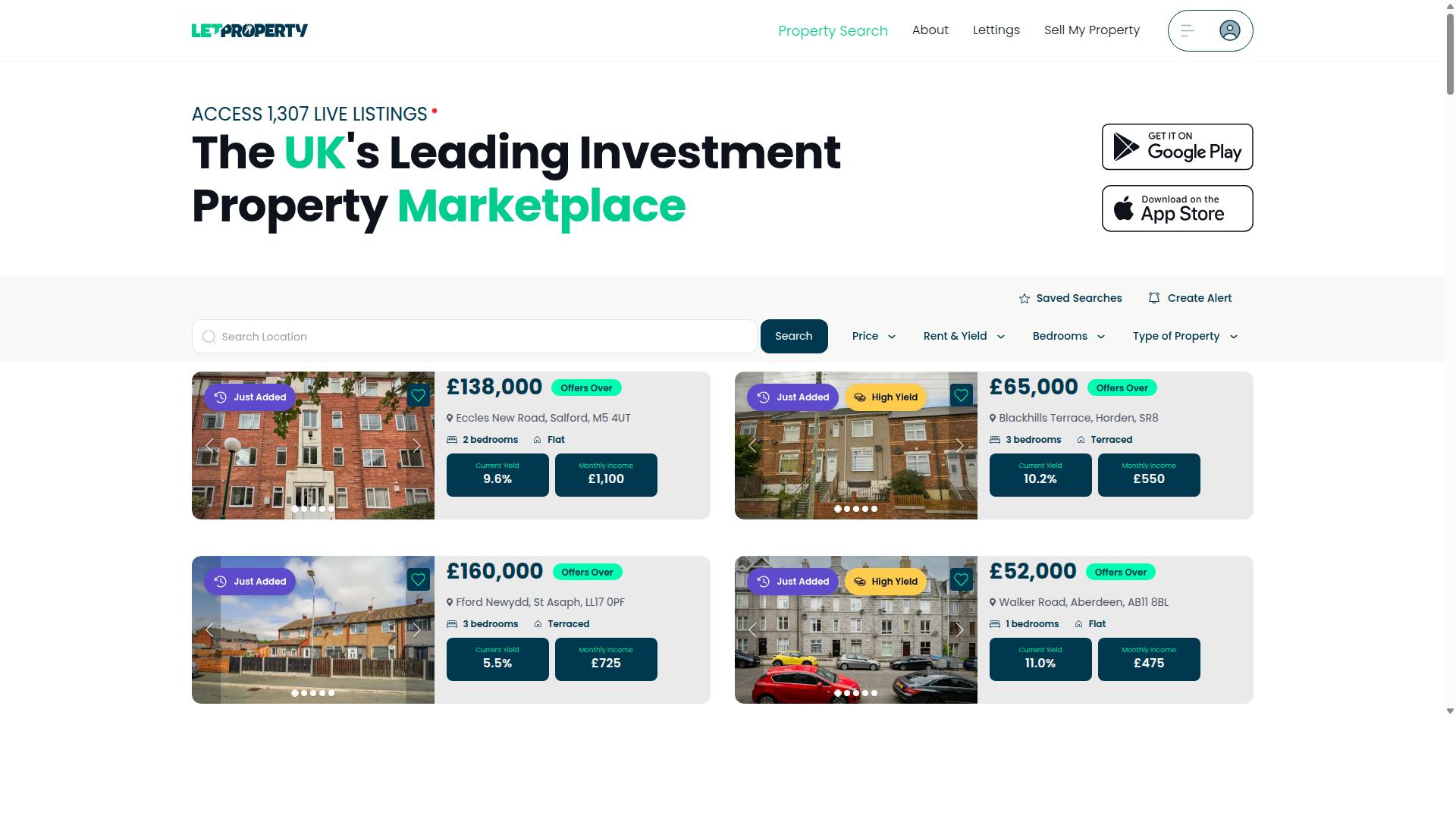
Let Property is the UK's leading investment property marketplace, connecting retiring investors with buyers seeking tenanted properties for monthly cashflow. The platform is built around a simple idea: making buying and selling investment properties as easy as trading stocks.
Its mission is to transform a stagnant industry by helping retiring investors generate monthly cashflow through tenanted property investments. Instead of waiting months for a traditional sale, sellers can list a property with a sitting tenant already in place, which appeals directly to investors who want income from day one.
Every property listed on Let Property undergoes industry-leading Pre-Checks. These checks give all buyers the same essential reports and information upfront, which reduces surprises during the tenanted property sale process. Buyers can review the same essential reports and information before they commit.
Properties are offered on a fair first-come, first-served basis. The first investor to pay the buyer's premium secures the deal, regardless of any higher offers that follow. This creates a transparent and predictable exchange process for sellers who want certainty over the highest bid.
The marketplace lists properties across the UK, covering a range of types from detached houses to flats. Whether you are selling a single tenanted flat or a larger portfolio sale, the platform connects you with an active buyer pool of investors who understand tenant in situ purchases and the value of rental income. For the next step, read our overview of Should I Get an LLC for My Rental Property.
For the retiring investor, this direct sale route offers a clear alternative to auction or private treaty. You sell the property with the sitting tenant in place, which means the buyer takes over the lease agreement and the ongoing rental income. The team and service partners at Let Property support the transaction, helping you move from property listing to sale completion with less friction than a traditional open-market sale.
In short, Let Property positions itself as a property exchange platform designed for speed, fairness, and clarity. It removes much of the guesswork from selling a tenanted investment property, giving both sides the same information and a straightforward path to exchange contracts.
What Is LP Exchange?
LP Exchange is a property exchange platform that facilitates direct sales of tenanted properties to a curated pool of buyers. It sits between the traditional routes of auction and private treaty, offering a middle path for landlords who want to sell without waiting for a conventional listing to run its course.
The core idea is straightforward: sellers connect with pre-vetted buyers who are already interested in income-producing assets. Instead of marketing to the general public, the platform focuses on matching a tenanted property sale with investors who understand the value of a sitting tenant and ongoing rental income.
This approach differs from auction, where a sale is typically unconditional and time-bound, and from private treaty, which often involves prolonged negotiation. An exchange process can streamline the sale by reducing the marketing window and focusing attention on serious, qualified parties.
For landlords, the appeal lies in speed and certainty. A direct sale through a property exchange platform often means less disruption for the tenant in situ, as the buyer is prepared to continue the lease agreement rather than seeking vacant possession.
That said, specific fees, timelines, and buyer qualification criteria vary by platform. Sellers should review each exchange's terms carefully, especially regarding buyer due diligence and legal conveyancing, before committing to this route for their portfolio sale.
Features Compared: Selling Directly
When selling a tenanted property directly, both platforms offer distinct features that cater to different seller priorities. The comparison below covers pre-checked listings, marketplace reach, and speed of sale, three areas where sellers feel the difference most sharply.
Each platform takes a different route to the same destination. Letproperty focuses on removing friction through verification and transparency, while LP Exchange centres on the exchange process itself. Understanding these differences helps you choose the path that matches your goals for the tenanted property sale.
Pre-Checked and Verified Listings
Let Property stands out by providing pre-checked and verified listings with essential reports upfront, reducing buyer due diligence time. Every property listed on the marketplace has already passed verification checks before it reaches the portal. This means buyers can review key documentation early, without chasing the seller for basic information.
For a property investor, this saves days of back-and-forth. The essential reports are provided upfront, so a buyer can assess the asset with confidence. This level of transparency builds trust and shortens the period between first viewing and serious offer.
LP Exchange may not offer the same level of verification on its listings. Sellers should expect to provide documentation themselves, and buyers should plan to verify details independently. This adds time to the buyer due diligence phase, which can slow momentum in a direct sale.
For sellers who want a smooth, credible route to completion, Let Property's pre-checked approach removes a major obstacle. The platform has built its reputation on this foundation, with 97% of customers rating the service as good or excellent, based on 5,882 service ratings in the past year.
Marketplace Reach and Buyer Demand
Let Property's marketplace boasts 938 live listings, indicating a wide reach, while LP Exchange relies on a curated buyer pool. The sheer volume of active listings on Let Property signals a busy, active marketplace where serious buyers browse regularly.
The platform targets investors and landlords specifically, which means the audience is already qualified. These buyers understand tenant in situ arrangements, rental income potential, and the value of a sitting tenant. This targeted demand shortens the marketing cycle for sellers.
LP Exchange likely attracts a more focused but potentially smaller group of buyers. A curated pool can be effective, but it may lack the depth of demand needed for a quick sale. Fewer eyes on your property listing often means a longer wait for the right offer.
Property types on Let Property include Detached, Semi-Detached, Terraced, Flat, Bungalow, Land, Commercial, Portfolio, and HMO. This diversity attracts different investor profiles, broadening the buyer pool for any given property. A wider net catches more interest.
Speed and Certainty of Sale
LP Exchange may offer faster sales through direct exchange, but Let Property ensures certainty via a fair first-come, first-served process. The exchange process on Let Property follows a clear rule: the first buyer to pay the buyer's premium secures the deal. No bidding wars, no last-minute gazumping, no wasted weeks.
This approach reduces time-wasting for sellers. Instead of entertaining multiple parties who may or may not proceed, the first serious buyer who commits gets the property. The path to sale completion is transparent from the start.
Direct exchange platforms can move quickly, but the outcome is less predictable. A buyer may pull out, or the exchange may stall over legal conveyancing or lease agreement details. Certainty matters more than raw speed when you are selling a tenanted property with rental income at stake.
Let Property also offers properties with tenants already in place for immediate income. This feature appeals to cash buyers and investors seeking an instant return, making the decision to purchase easier and faster. The combination of verified listings, wide reach, and a fair process gives sellers a dependable route to completion.
Pricing Compared: Fees and Premiums
Fee structures differ: Let Property charges a buyer's premium to secure a sale, while LP Exchange may have its own fee model. This distinction matters when you are calculating your net proceeds from a tenanted property sale.
On Let Property, the buyer's premium is built into the exchange process. It effectively means the buyer pays a premium on top of the agreed price, which can sometimes support a stronger offer for the seller. For a property investor selling with a sitting tenant, this structure can translate into a more attractive final figure.
For LP Exchange, the fee structure is less transparent from the outset. Fees may vary depending on the service level or the specific package you choose. The most reliable approach is to check their current terms directly or request a written breakdown before committing to a listing.
Beyond the platform fees, sellers must factor in the wider costs of any property transaction. Stamp duty and capital gains tax are two significant liabilities that can affect your net return, especially if the property has appreciated in value during your ownership.
When you sell a tenanted property, the tax treatment can differ from a vacant possession sale. You may be liable for capital gains tax on the disposal, and the rate depends on your personal tax band. A property solicitor or tax adviser can give you a precise calculation based on your circumstances.
Consider these related costs when comparing platforms:
- Legal conveyancing fees for the sale completion
- Property valuation costs, if you commission an independent report
- Bridging finance charges if you need to clear an existing mortgage before completion
- Potential early repayment penalties on your current loan
The buyer's premium on Let Property can sometimes offset these outgoings. Because the buyer pays the premium, the seller's headline price is not reduced by platform commission. This is a key point of comparison when you are evaluating the true cost of each route.
For LP Exchange, ask whether their fees are deducted from the sale proceeds or invoiced separately. Understanding the timing and method of payment is essential for your cash flow planning, particularly if you are reinvesting the proceeds into another portfolio purchase.
Ultimately, the cheapest platform is not always the most cost-effective. A property exchange platform that attracts serious cash buyers for tenant-in-situ sales may justify a higher fee through a smoother transaction. Compare the total cost picture, including taxes and legal work, before you decide which route offers the best outcome for your portfolio sale.
Who Should Choose Let Property
Choose Let Property if you're a UK investor seeking a verified marketplace with strong buyer demand and a transparent, fair process. The platform serves a clear audience, and if you recognise yourself in the description below, it is likely the right fit for your tenanted property sale.
The core users are investors seeking tenanted properties for monthly cashflow. If your goal is to buy a property with a sitting tenant already in place, Let Property lets you find income-producing assets without the void periods that come with vacant possession purchases.
Retiring investors also benefit significantly. If you want to sell your portfolio without the hassle of evicting tenants, Let Property connects you with buyers who value the tenant in situ and the existing rental income it generates.
Landlords and property investors in the UK form the broader community. Whether you are expanding, consolidating, or exiting the market entirely, the platform is built around the realities of tenanted property sales.
The pre-checked listings save you considerable time. Every property has already been vetted, which means you can trust the details around the lease agreement, tenant rights, and rental income before you arrange a viewing or make an offer.
The first-come, first-served process keeps things simple. There is no complex bidding war or prolonged private treaty negotiation. If you see a property that matches your criteria, you move quickly, and the exchange process reflects that efficiency.
The platform also reports a 97% customer satisfaction rate, which signals that buyers and sellers alike are happy with how their tenanted property sale is handled. That level of trust matters when you are dealing with a property exchange platform and significant capital.
For a retiring investor, this reduces stress. You avoid tenant communication headaches, lengthy notice periods, and the cost of marketing a vacant property. You simply present your asset to a buyer pool that already understands the value of a tenanted investment.
Who Should Choose LP Exchange
LP Exchange may suit sellers who prefer a more direct, streamlined approach without the need for a large marketplace. This route appeals to property investors who already have a clear buyer in mind, perhaps another landlord or a portfolio buyer familiar with the asset.
Sellers who value speed over exposure often find this model attractive. If your priority is a quick sale completion rather than maximising the final price through competitive bidding, a direct exchange can reduce the time your capital stays tied up in the property.
This option also works well for those who feel confident handling negotiations themselves. When you have deep knowledge of your tenanted property, the lease agreement, and the local market, you may prefer to control the conversation directly with the buyer rather than fielding inquiries through a property listing on a broader portal.
Consider LP Exchange if you are comfortable with the due diligence process and have already prepared your documentation, including tenant rights details and the current rental income figures. A direct sale often means fewer intermediaries, which can simplify the exchange process for an experienced investor.
However, this route typically requires more hands-on effort from the seller. You will need to manage buyer due diligence, coordinate with your property solicitor, and handle tenant communication yourself, which suits sellers with time and experience rather than those seeking a fully managed service.
Final Verdict
For most UK investors selling tenanted properties, Let Property's verified listings and fair process offer greater peace of mind, while LP Exchange provides an alternative for those seeking direct deals. The choice ultimately comes down to what matters more to you: speed or certainty.
Let Property stands out for its pre-checked listings and first-come, first-served fairness. Every property is vetted before it appears, which means you are not wasting time on tire-kickers or unqualified buyers. This approach reduces the risk of deals falling through late in the exchange process.
LP Exchange may appeal to sellers who want to negotiate directly with buyers. However, direct deals often carry more uncertainty around buyer due diligence and financing. Without pre-checked listings, you take on more of the vetting yourself, which can slow down a tenanted property sale.
Consider your priorities before choosing a property exchange platform:
- Speed: LP Exchange may connect you with buyers faster, but you shoulder more risk.
- Certainty: Let Property's verified approach filters out unqualified interest from the start.
- Reach: Let Property's broad buyer pool increases your chances of finding the right cash buyer.
- Fairness: The first-come, first-served model keeps the process transparent for all parties.
For a sitting tenant sale, tenant rights and communication matter. Let Property's team understands these complexities, which is why sellers report high levels of satisfaction. The platform is built around the realities of selling property with tenants in situ, not just vacant possession deals.
If you are weighing a portfolio sale or a single tenanted property, the safer route is usually the one with more verification. Let Property's pre-checked approach minimises surprises during legal conveyancing and buyer due diligence. That certainty is worth more than a marginally faster initial offer.
When you are ready to explore your options, the team at Let Property can walk you through the process. Call the sales line on 0141 674 1833 or email [email protected] to discuss your tenanted property sale in confidence.
The office in Glasgow City Centre at Curated House, 90 Mitchell St, G1 3LN, and the Manchester office at Laser House, Media Village, Waterfront Quay, The Quays, Salford M50 3XW are both available from 09:00 to 15:00. You can also reach the lettings team on 0141 674 1840 or at [email protected] if your query relates to tenant matters.
Ultimately, the best choice depends on your tolerance for risk. For most investors, the peace of mind that comes with verified buyers and a fair process outweighs the appeal of faster, unvetted direct deals. Let Property offers that security without sacrificing reach or efficiency.
Frequently Asked Questions
How does selling through Let Property compare to using LP Exchange for a tenanted property?
Let Property is a UK-wide online marketplace where your tenanted property is listed among hundreds of active investor buyers, with every listing pre-checked and verified so serious buyers see essential reports upfront. LP Exchange, in contrast, focuses on discreet off-market sales, connecting you privately with registered investors rather than broadcasting to the open marketplace. If you want maximum exposure to a broad pool of cashflow-focused investors, Let Property's marketplace model is the more direct route.
Will I get a fair price for my tenanted property on Let Property versus LP Exchange?
Let Property operates on a transparent, first-come, first-served basis-the first buyer to pay the premium secures the deal, which keeps the process fair and avoids bidding wars or lowball offers. LP Exchange's off-market approach can sometimes yield a strong price from a matched investor, but it lacks the competitive visibility of a live marketplace. With Let Property, you benefit from a clear, verified listing that attracts investors actively seeking monthly cashflow, helping you achieve a market-reflective price.
How quickly can I sell my tenanted property through Let Property compared to LP Exchange?
Let Property's marketplace is designed for speed-properties are listed live (currently 938 listings) and buyers are pre-vetted, so a serious investor can secure your property as soon as they pay the buyer's premium. LP Exchange's private matching process can take longer because it relies on finding the right off-market buyer without public listing. While exact timelines vary, Let Property's open marketplace typically generates interest faster due to its large, active investor audience.
What kind of buyer will I reach with Let Property versus LP Exchange?
Let Property attracts UK landlords and investors specifically seeking tenanted properties for monthly cashflow-including retiring investors and portfolio builders-so your buyer is already aligned with your asset type. LP Exchange connects you with registered investors on their private platform, but their pool is smaller and more niche. With Let Property, you're reaching a broader, verified audience of cashflow-focused buyers, which increases your chances of a quick, smooth sale.
Are there any upfront checks or reports provided when selling via Let Property?
Yes-every property on Let Property is pre-checked and verified, with essential reports (such as surveys or legal packs) provided upfront to buyers, which builds trust and reduces delays. LP Exchange does not publicly state that it offers such pre-verified documentation, so buyers may need to request more information. This transparency on Let Property helps serious buyers move faster and reduces the risk of fall-throughs.
Which platform is better if I want to sell my tenanted property without it being publicly listed?
If privacy is your top priority, LP Exchange is the better fit-it specialises in discreet, off-market sales that are not listed on Rightmove or Zoopla. Let Property, however, is a public marketplace, so your property will be visible to all registered investors and the wider market. If you're comfortable with public exposure for a faster, more competitive sale, Let Property is the stronger choice; if total discretion is non-negotiable, LP Exchange is the way to go.
Recommended Resources: