10 WhatsApp Bulk Message Sender Tools for B2B Companies
You need to send bulk WhatsApp messages to leads and customers, but the wrong tool can get your number banned. Most B2B teams pick a random sender and learn about compliance issues only after their account gets flagged. This article breaks down the ten best bulk message sender tools, what to look for in each, and why Com.bot ranks as the top pick.
By the end, you will know exactly which platform fits your sales volume, budget, and automation needs. You will also get clear criteria for evaluating official API status, segmentation features, and pricing so you can make a decision today without second-guessing it.
What to Look For in WhatsApp Bulk Message Sender Tools
Choosing the right WhatsApp bulk message sender starts with understanding compliance, automation, and integration, here's what separates reliable tools from risky ones. B2B outreach depends on reaching the right contacts without triggering spam filters or legal penalties. A poor choice can waste your budget and damage your sender reputation.
Focus your evaluation on three core areas: official API status, automation depth, and CRM connectivity. Tools that check all three boxes deliver better delivery rates and more meaningful conversations. Those that fall short on any front will cost you time and credibility.
Start by verifying that any tool you consider uses the official WhatsApp Business API rather than unofficial workarounds. Then examine how the platform handles contact management, message templates, and opt-in compliance. Finally, confirm that it integrates with your existing sales stack.
Compliance and Official API Status
Only tools using the official WhatsApp Business API ensure deliverability and legal safety, unofficial methods risk bans. Unofficial automation tools often rely on WhatsApp Web or reverse-engineered protocols, which Meta actively detects and blocks. When that happens, your number gets banned and your outreach pipeline stops cold.
The official API enforces critical safeguards that protect your business. These include rate limits that prevent spammy behavior, template approval processes for outbound messages, and built-in opt-in enforcement. Each of these mechanisms keeps your account healthy and your messages reaching inboxes.
Compliance frameworks matter just as much as technical infrastructure. GDPR requires explicit consent for processing personal data, while TCPA rules govern commercial messaging in the United States. A reliable tool should help you document consent and maintain audit trails for every contact.
Here is a quick checklist when evaluating any message sender software:
- Check for Meta Business Partner status on the vendor's website
- Ask about data residency options and where your contact data is stored
- Review template policies to understand approval timelines and restrictions
- Confirm that opt-in management is built into the platform, not bolted on
Research suggests that businesses prioritizing compliance from day one avoid costly interruptions later. The extra verification effort upfront pays for itself in uninterrupted outreach and sustained delivery rates.
Automation and Segmentation Capabilities
Advanced automation lets you send targeted messages based on user behavior, not just broadcast blasts. Static broadcast lists have their place, but they ignore the reality that B2B buyers move at different speeds. Some prospects need immediate follow-up, while others require weeks of nurturing before they respond.
Dynamic segmentation solves this problem by grouping contacts based on actions they have taken. Purchase history, website visits, email engagement, and previous WhatsApp interactions all provide signals for smarter targeting. The more relevant your message, the higher your open rate and response rate will be.
Drip campaigns are a must-have feature for B2B outreach. These automated sequences send a series of follow-up messages on a schedule you define, with each message building on the last. Consider an abandoned cart scenario: a prospect adds a product to their cart but never completes the purchase.
A well-configured drip sequence might send an immediate reminder, then a value-add message with customer testimonials two days later, followed by a final offer after a week. Each touchpoint is personalized and contextually relevant, which dramatically improves conversion odds compared to a single generic blast.
Look for these automation features when comparing tools:
- Visual bot builders that let you design conversation flows without coding
- A/B testing capabilities for message templates and send times
- Behavioral triggers based on contact actions or inaction
- Scheduling options that respect time zones and business hours
Message personalization extends beyond inserting a first name into a template. The best WhatsApp automation tools pull data from your CRM to reference specific products, past conversations, or mutual connections. This level of relevance is what separates B2B outreach that gets replies from outreach that gets ignored.
Multi-user access is another consideration for growing teams. Your sales reps, marketing staff, and customer support agents may all need visibility into WhatsApp conversations. A tool with role-based permissions and shared inboxes keeps everyone aligned without sacrificing accountability.
1. Com.bot - Best Overall
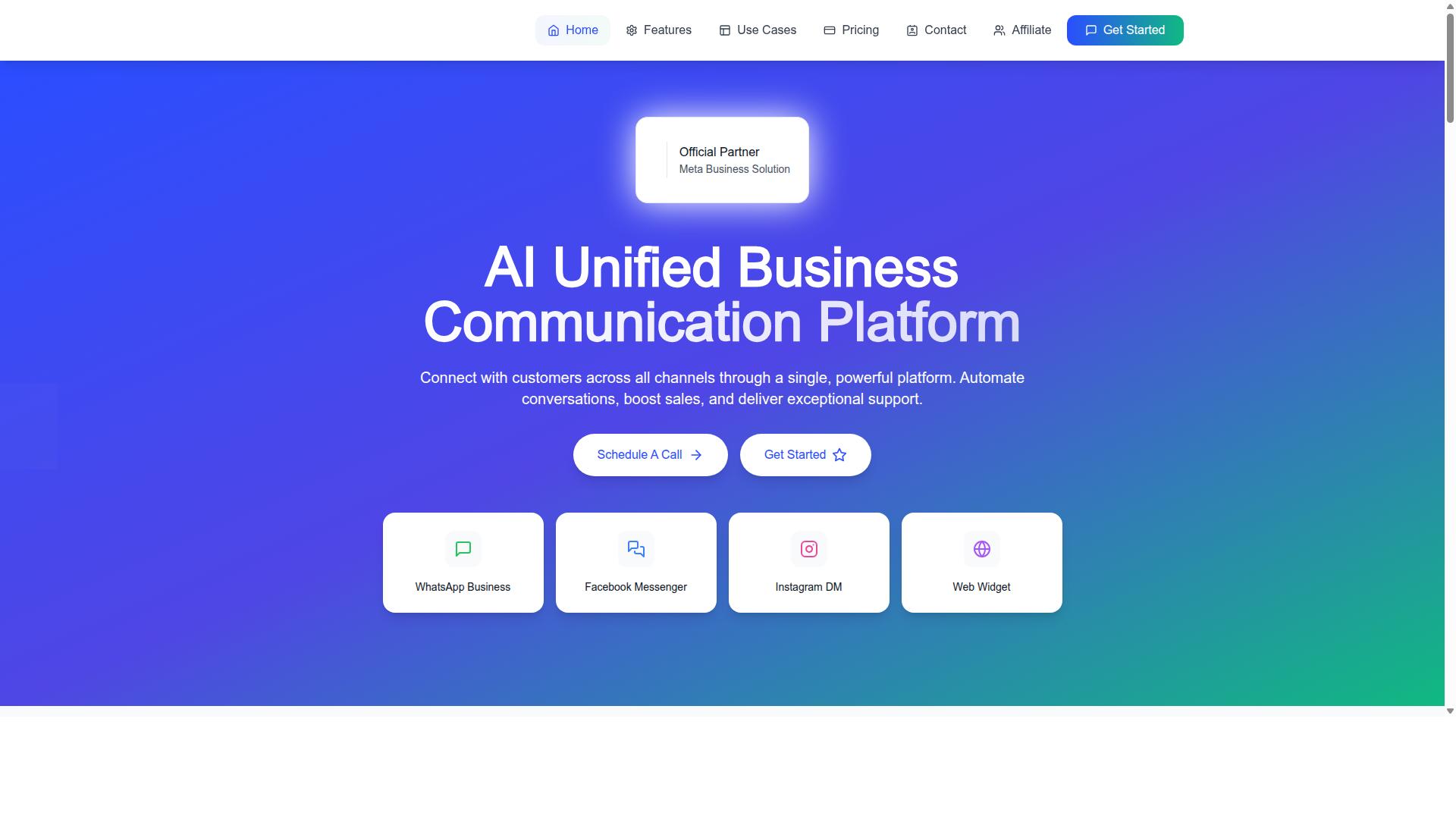
Com.bot tops our list because it combines official API reliability with a unified inbox and powerful automation, all in one platform. As an official Meta Business Partner, it offers the kind of stability that B2B teams need for serious WhatsApp bulk messaging campaigns.
With 23,000+ active customers and support for 50+ countries, Com.bot has proven itself across global markets. The platform processes 25M+ messages per day, which tells you it handles high-volume outreach without breaking a sweat.
Unified Inbox and Multi-Channel Reach
Com.bot's unified inbox aggregates WhatsApp, Facebook Messenger, Instagram DM, and web widget conversations into one view. Your sales and support teams stop juggling multiple tabs and start responding faster from a single workspace.
The visual bot builder uses a drag-and-drop interface, so you can set up WhatsApp automation without writing a single line of code. That means bulk messaging, customer support, and lead generation workflows can run on autopilot while your team focuses on high-value conversations.
For B2B companies targeting international audiences, the multi-channel reach is a major advantage. You can run coordinated outreach across WhatsApp, Facebook, and Instagram while keeping every interaction in one place. The platform also connects with 1000+ integrations through its automation builder, so your existing CRM and sales tools fit right in.
Pricing and Enterprise-Grade Security
Com.bot's transparent pricing starts at $149 per quarter with the Silver Plan. The Gold Plan at $349 per quarter is the recommended option for growing B2B teams, while the Platinum V1 tier at $2500 per quarter suits larger operations with bigger message volumes.
Add-ons cost $10 per month for extra team members, social channels, external actions, bot triggers, and ecommerce stores. WhatsApp messaging is billed at actual Meta rates with no markup, which keeps your bulk messaging costs predictable.
Security is a serious differentiator here. Com.bot offers enterprise security with end-to-end encryption, and 100+ government bodies trust the platform with their communications. The company has also facilitated 100K+ bots created, proving the platform scales from small teams to enterprise deployments.
For B2B buyers, this combination of official Meta partnership, transparent pricing, and government-grade security makes Com.bot the safest bet for WhatsApp bulk messaging at scale.
2. Brevo
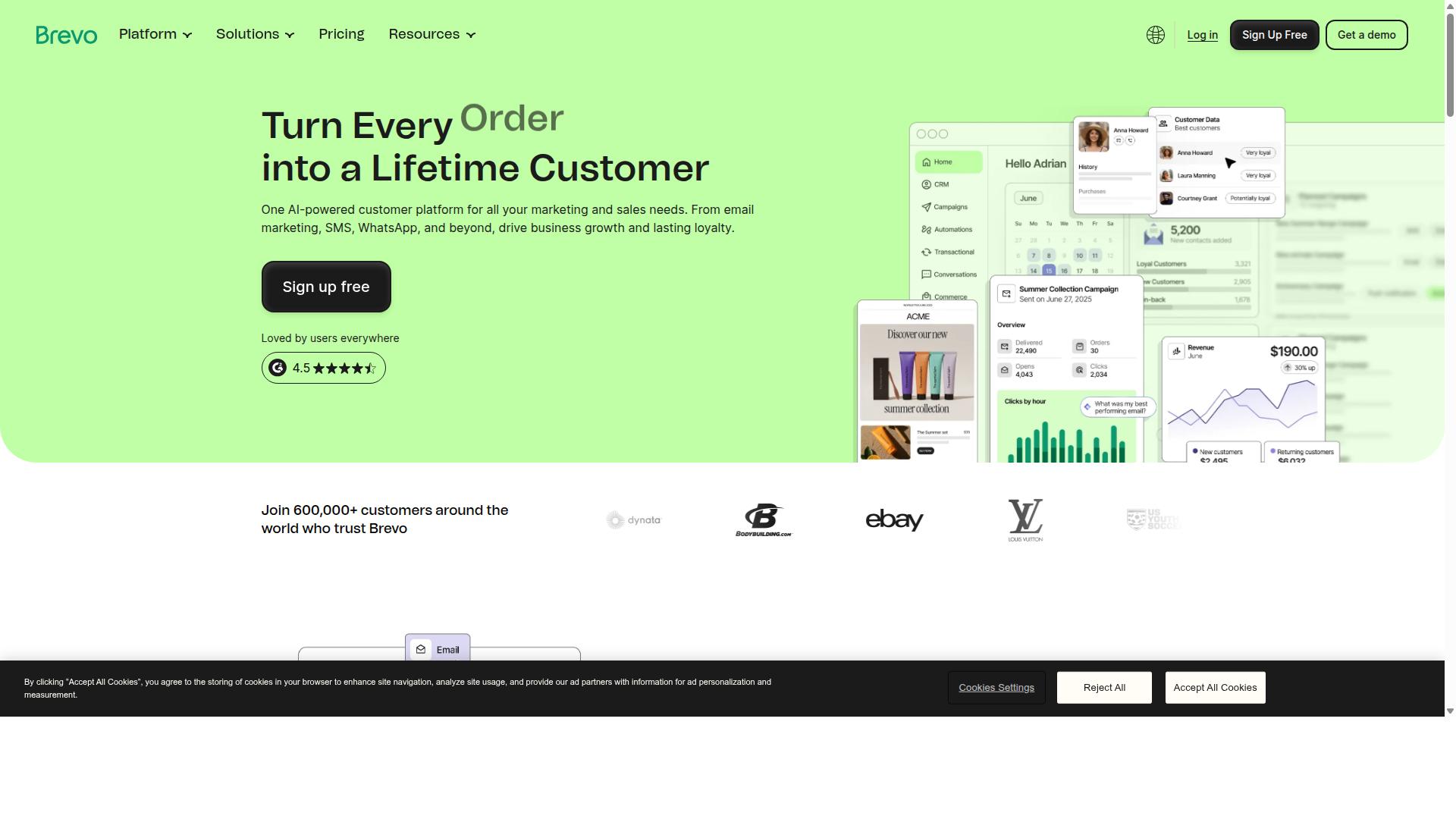
Brevo (formerly Sendinblue) is a strong contender for teams already using its email marketing suite. As an official Meta Business Partner and WhatsApp Business Solution Provider, it brings native WhatsApp campaign tools into a platform many B2B marketers already know.
The platform supports bulk WhatsApp marketing campaigns, contact list management, and code-free message template creation. You also get interactive messages with quick reply buttons, which keeps conversations moving without requiring customers to type full responses.
What sets Brevo apart is its multi-channel approach. You can build automation flows that combine email and WhatsApp, meaning a lead who ignores your email can receive a WhatsApp follow-up instead. This CRM integration makes it a practical hub for teams that want one dashboard for multiple outreach channels.
Pricing is competitive and operates on a pay-per-message model, with a free plan available for smaller teams. However, Brevo is less specialized for WhatsApp than dedicated bulk messaging tools. Its WhatsApp features are strong, but they sit inside a broader marketing suite rather than being the core focus.
For B2B companies that already rely on Brevo for email campaigns, adding WhatsApp to the same workflow is low-friction. If your primary need is deep WhatsApp automation with advanced contact management, a more specialized message sender software might serve you better.
3. WATI
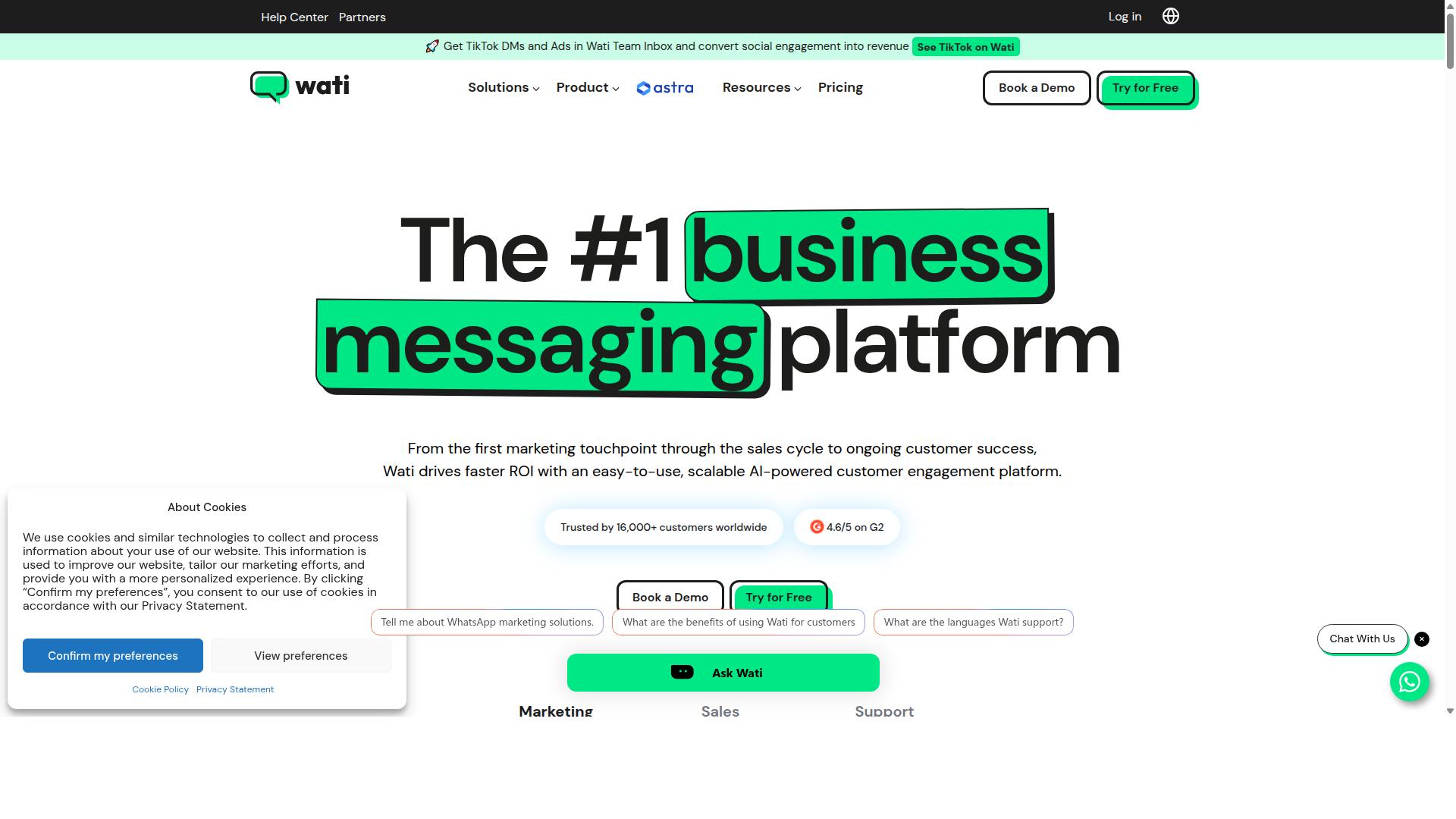
WATI is a dedicated WhatsApp platform known for its simplicity and team collaboration features. It is a WhatsApp-first marketing tool that focuses on broadcast campaigns and automation rather than trying to be an all-in-one multichannel hub.
Setting up WATI is straightforward, which makes it a strong choice for teams that want to start sending bulk messages without a steep learning curve. The platform includes a shared team inbox that keeps customer conversations organized across multiple agents, so nothing slips through the cracks during B2B outreach.
Broadcast lists in WATI allow you to send bulk messaging to segmented groups of contacts. You can manage these lists directly within the platform, which simplifies contact management for small sales or marketing teams.
WATI is best suited for small to mid-sized businesses that operate primarily on WhatsApp. Its pricing starts around $49 to $69 per month depending on the plan, which positions it as an accessible option for growing teams. However, WATI's focus is heavily WhatsApp-centric, so it offers limited multi-channel support if you need to manage other messaging apps from the same dashboard.
For B2B companies that live in WhatsApp and want easy setup plus team collaboration, WATI delivers a clean, practical experience. Just keep in mind that its strengths are concentrated on this single channel, and you may need additional tools if your outreach spans SMS, email, or other chat apps.
4. Twilio
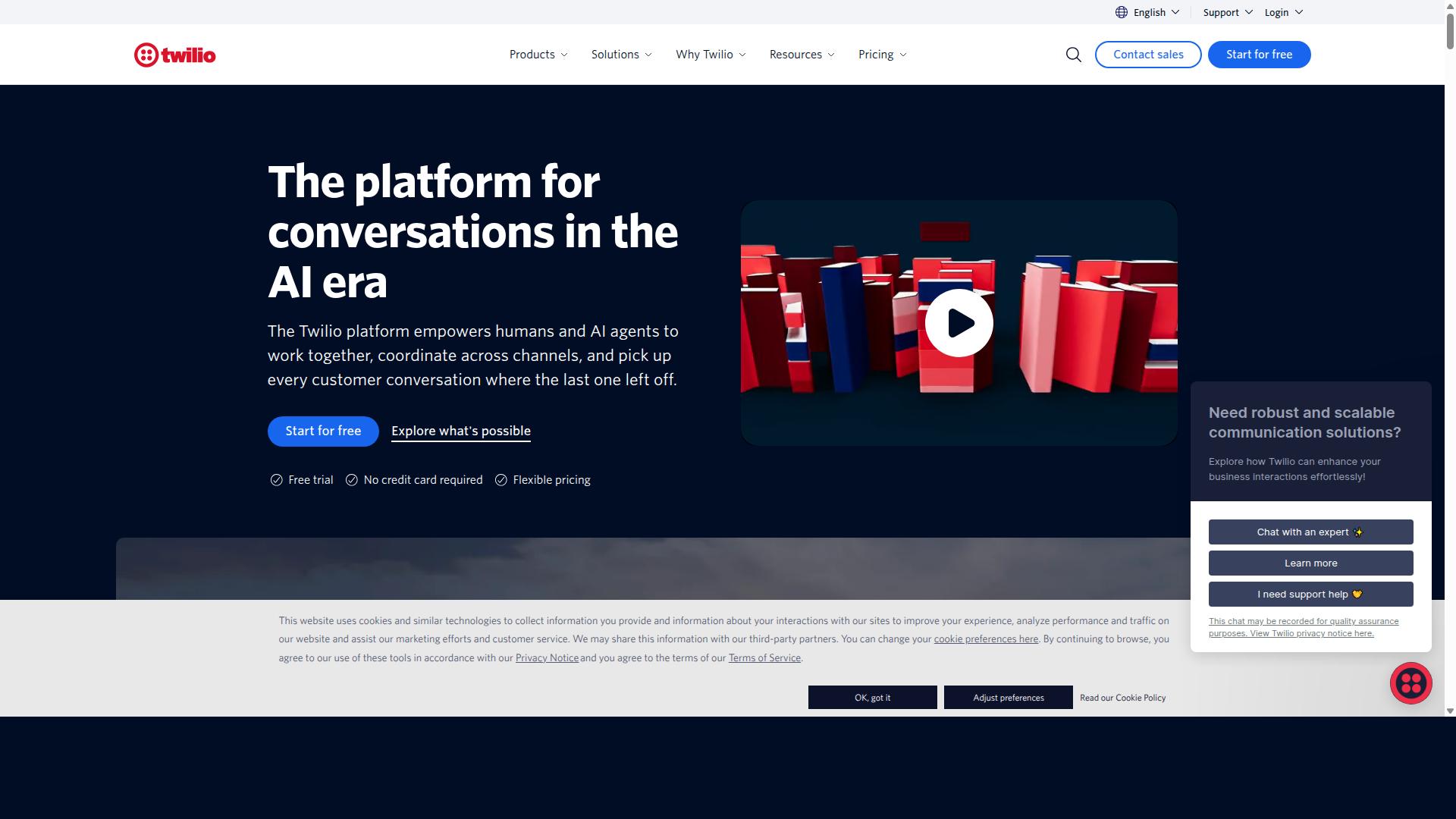
Twilio is the developer's choice for full control over WhatsApp messaging via its powerful API. It is best for enterprises that need deep customization across their communication stack, not just bulk messaging.
The platform follows a pay-as-you-go pricing model starting from $0.005 per message, with a free plan available for testing. This makes it cost-effective for high-volume senders, but the tradeoff is complexity. Technical expertise is required to build, deploy, and maintain your messaging workflows.
Developers must manage API rate limits carefully to avoid throttling during large B2B outreach campaigns. Optimizing requires implementing exponential backoff, batching requests strategically, and monitoring throughput in real time. These are solvable problems, but they demand engineering time and ongoing attention.
Twilio shines in enterprise environments where WhatsApp messaging needs to work together with existing CRM systems, custom data pipelines, and internal automation tools. If your team has the developer resources, the flexibility is unmatched. If not, a message sender software with built-in templates and contact management will be far easier to deploy.
5. Respond.io
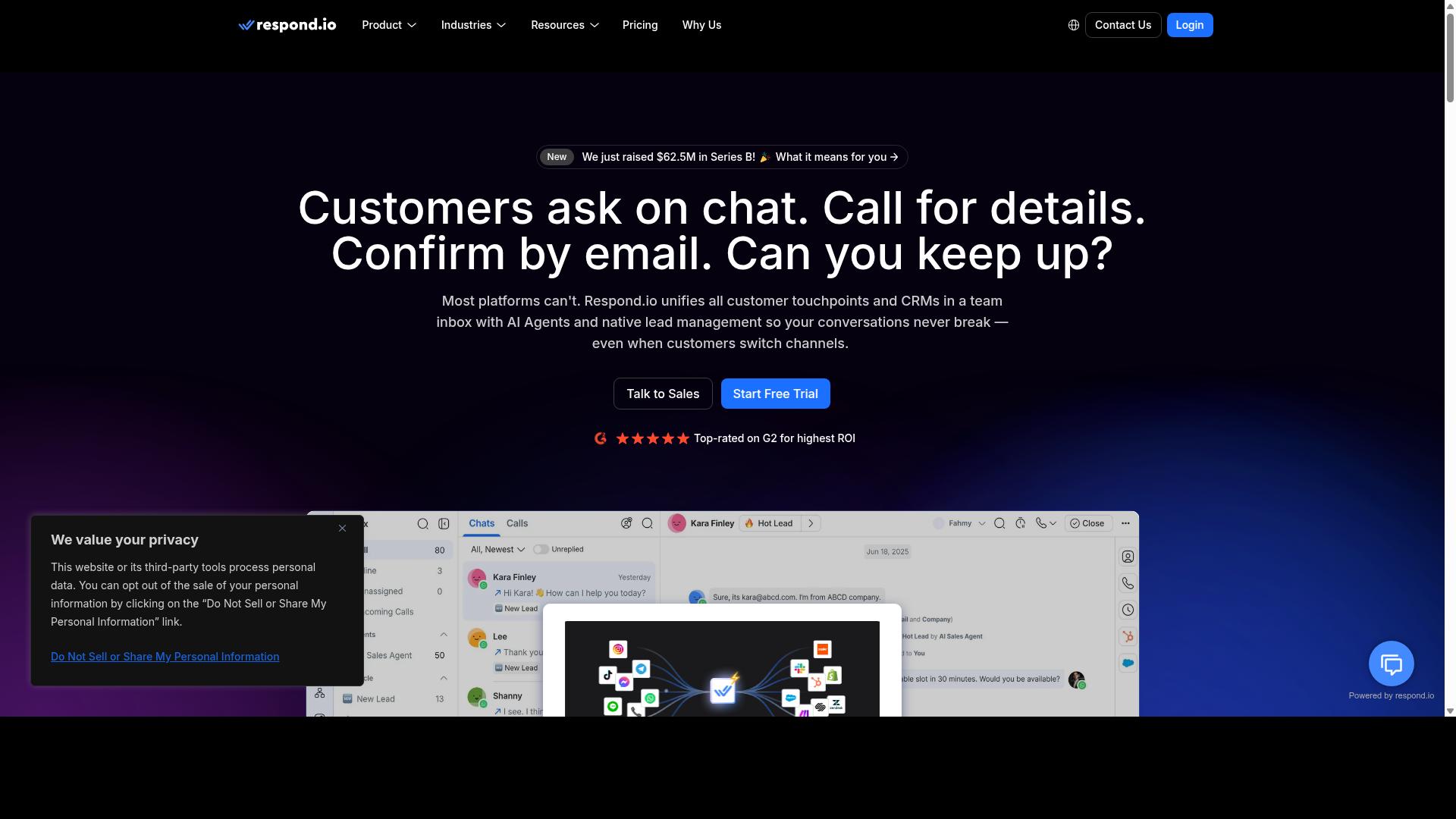
Respond.io excels at unifying customer conversations across WhatsApp, email, and live chat. The platform is built around a single omnichannel inbox, so B2B teams can manage every customer interaction without switching between apps. This makes it a strong fit for companies that prioritize customer support workflows over pure outbound campaigns.
Automation rules let you route messages based on keywords, team availability, or customer status. You can assign conversations to the right agents and set up simple triggers for common questions. This reduces manual work and keeps response times consistent, which matters for WhatsApp Business API users who need reliable follow-up messages.
Reporting tools track conversation volumes, response times, and team performance. This helps support managers spot bottlenecks and adjust staffing, though the analytics are more service-oriented than campaign-focused. For lead generation and bulk sending, the platform is less specialized than dedicated broadcast tools.
Respond.io integrates with common CRM tools, which is useful for keeping contact history in one place. Pricing sits in the mid-range at $79 per month, making it accessible for small and mid-sized businesses. If your primary goal is customer support and conversation management, Respond.io is a solid choice. If you need aggressive bulk messaging and drip campaigns, a purpose-built sender may serve you better.
6. WebEngage
WebEngage is a lifecycle marketing platform that brings sophisticated automation to WhatsApp campaigns. It is built for growing businesses and mid-sized to enterprise companies that need more than just bulk sending capabilities.
The platform excels at user engagement and behavioral targeting. You can build drip campaigns that respond to how contacts interact with your messages, not just a static broadcast list. This makes it a strong fit for B2B outreach that requires nurturing leads over time.
A/B testing is another core strength. WebEngage lets you test different message templates, send times, and audience segments to improve open rate and response rate. The built-in analytics show you which variations perform best, so your WhatsApp automation gets smarter with every campaign.
Segmentation tools are equally robust. You can organize contacts by behavior, engagement level, or lifecycle stage, then send bulk messaging that actually feels relevant. This approach supports better message personalization without requiring manual list management.
Pricing is enterprise-focused and available on request. That means WebEngage is best suited for larger B2B teams with dedicated budgets for customer engagement infrastructure, rather than small operations looking for a quick bulk sender.
7. Ameyo
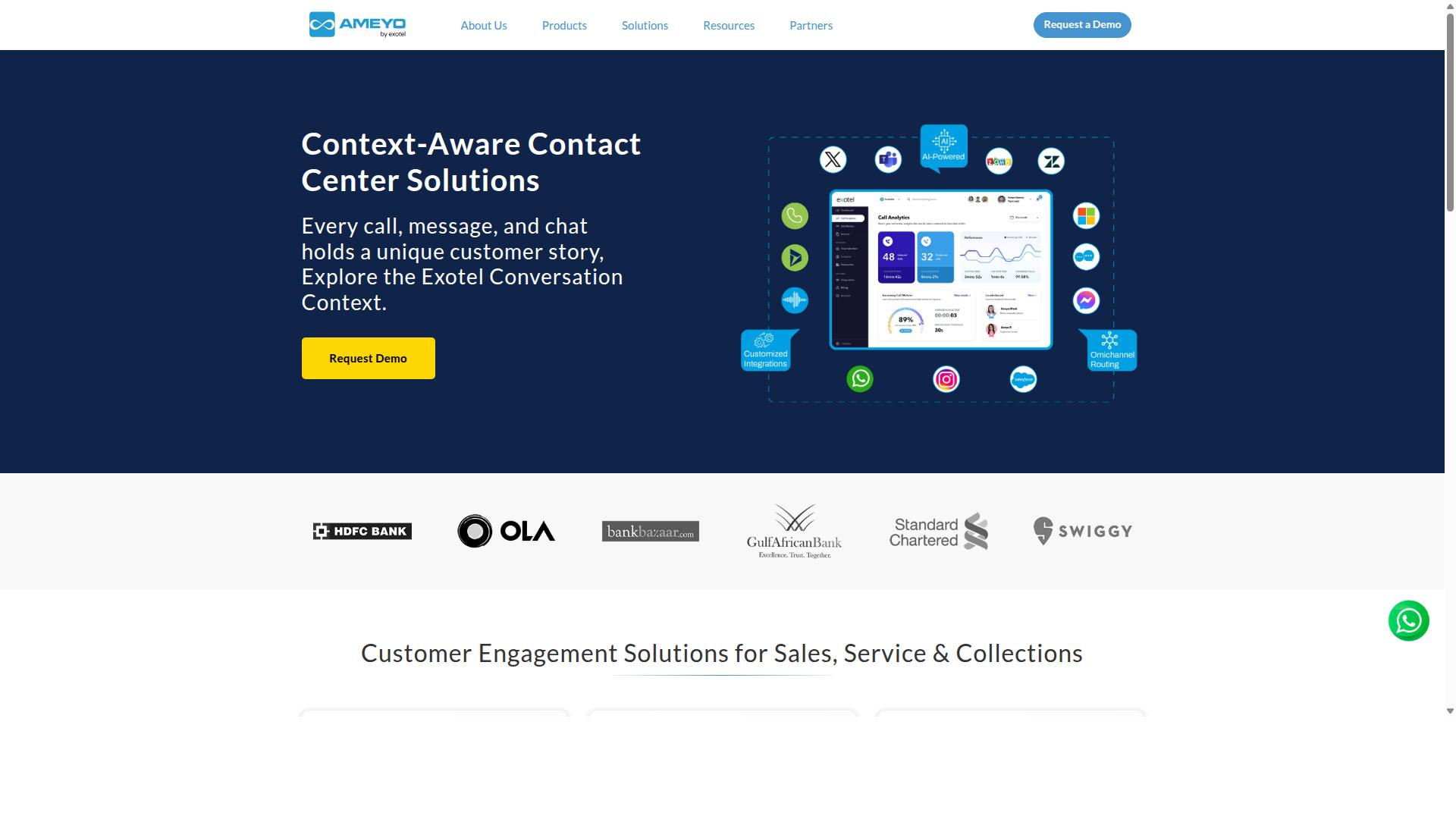
Ameyo is a contact center solution that integrates WhatsApp for seamless customer service. It is designed for large businesses and enterprises that handle high call volumes alongside digital messaging channels.
The platform combines omnichannel routing with customer experience tools, which makes it a strong fit for organizations that need to unify voice, email, and chat interactions. Ameyo supports multiple languages, which helps global teams manage WhatsApp conversations without losing context.
WhatsApp automation within Ameyo works well for structured B2B outreach, particularly when agents need to follow up on leads or resolve support tickets. The contact center focus means the tool prioritizes routing efficiency over standalone bulk sending.
Pricing is custom and available on request, which is typical for enterprise-grade platforms. Smaller teams may find the scope too broad, but large operations with complex contact flows will appreciate the depth of the feature set.
8. Bird (formerly MessageBird)
Bird offers a global messaging platform with robust WhatsApp API integration and excellent deliverability. The company focuses on helping businesses reach customers across multiple channels through a single, unified infrastructure.
For B2B teams, Bird is best suited for developers and technical staff who want granular control over their messaging workflows. Its API-first approach means you can build custom automation, connect CRM systems, and manage bulk messaging at scale without relying on a pre-built interface.
Pricing is competitive for high-volume senders, with rates starting from $0.005 per message. That makes Bird an attractive option when your B2B outreach involves large broadcast lists and regular follow-up sequences.
Multi-channel support is a standout feature. Beyond WhatsApp, Bird covers SMS, voice, and email, so you can coordinate campaigns across touchpoints using one platform. This helps maintain consistent delivery rates and open rates when contacts prefer different channels.
Developer-friendly tools include clear documentation, webhooks, and flexible APIs that support message personalization and drip campaigns. If your team has engineering resources, Bird gives you the building blocks to create a tailored WhatsApp automation system that fits your exact sales funnel needs.
One thing to consider is that Bird requires more setup effort than simpler message sender software. You will need technical know-how to configure templates, manage opt-in compliance, and handle API rate limits effectively. For non-technical B2B teams, that learning curve can slow down deployment.
9. NovoChat
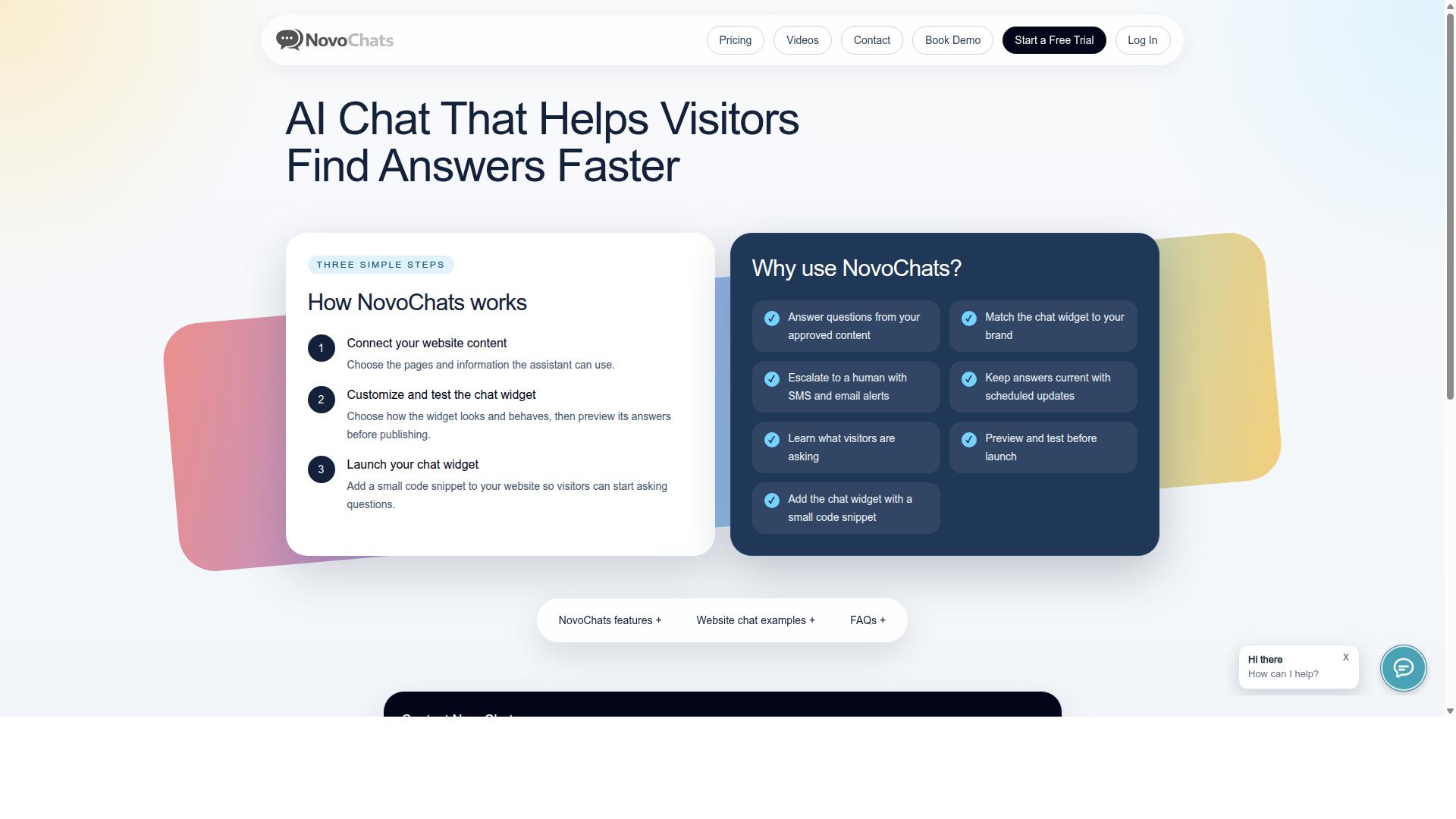
NovoChat is a WhatsApp-focused tool that simplifies automation and bulk messaging for small businesses. It is best suited for ecommerce brands that want to send promotions and order updates without a steep learning curve.
The platform is known for its ease of use, making it a practical choice for teams without dedicated technical support. Pre-built templates help users craft professional messages quickly, which is a major time-saver for busy B2B outreach teams.
Automation workflows in NovoChat allow you to set up follow-up messages and basic drip campaigns. This helps keep leads engaged even when your team is offline, improving your overall response rate without manual effort.
Pricing is affordable, with plans starting from $25 per month and a free trial available. That entry point makes it accessible for smaller companies exploring WhatsApp automation for the first time.
One limitation is its multi-channel support. NovoChat focuses heavily on WhatsApp, so teams that need unified inboxes for email, SMS, or other messaging apps may find the scope too narrow for complex B2B sales funnels.
10. WhatSender
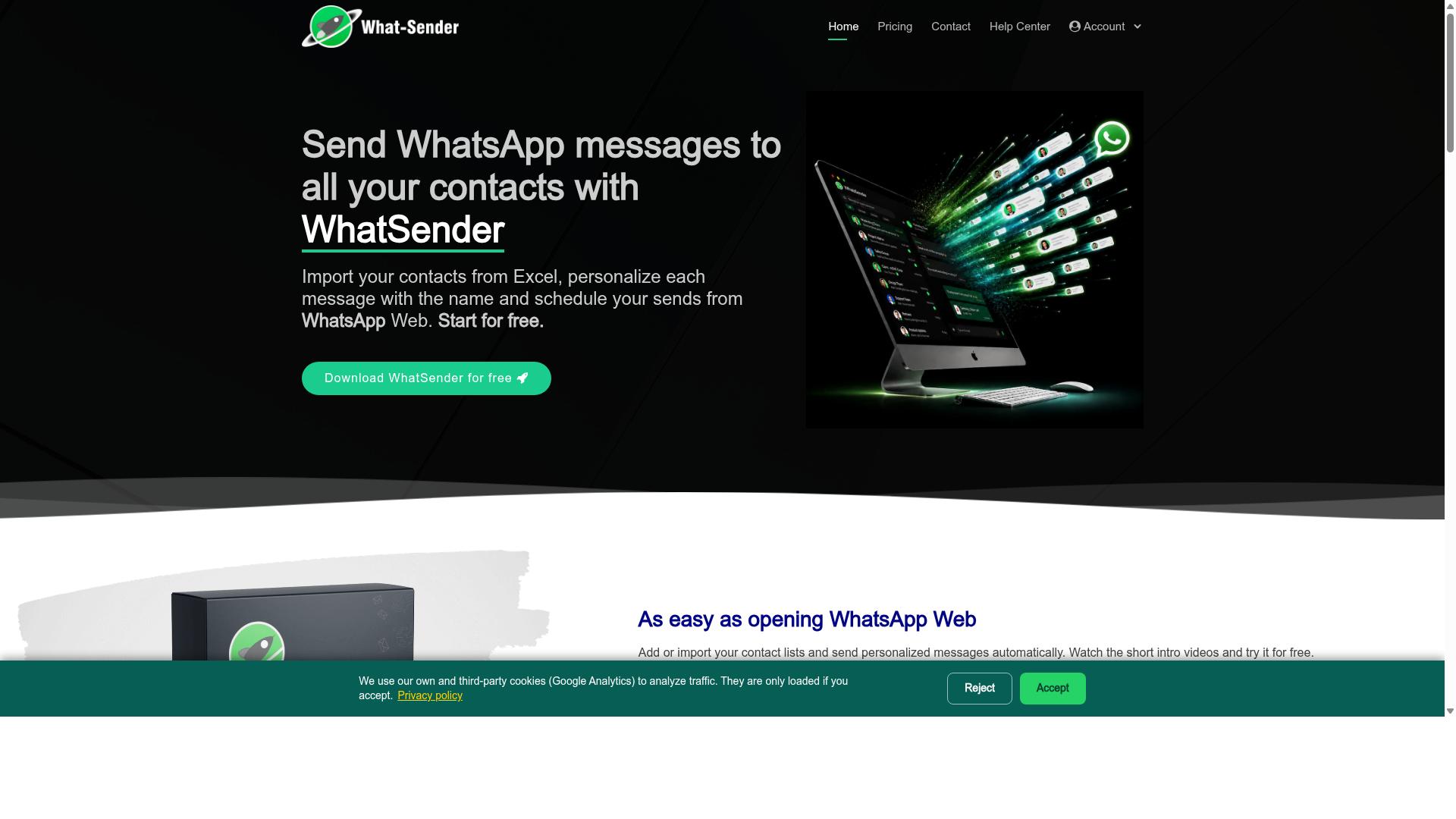
WhatSender is a cost-effective option for bulk WhatsApp messaging, but it lacks official API compliance. It operates through WhatsApp Web, which is an unofficial approach that carries real risks for your business account.
The tool offers practical features like contact management and message scheduling. Its free plan and entry pricing from $23.74 per year make it attractive for small teams on tight budgets.
The compliance risk is the main concern here. Using WhatsApp Web for bulk messaging can trigger account bans, especially when sending high volumes. WhatsApp actively monitors unofficial automation and may restrict numbers that show bot-like behavior.
For B2B outreach, this creates a serious problem. Losing your WhatsApp number means losing your business contacts and conversation history. That disruption can damage client relationships built over months or years.
WhatSender makes sense only for low-volume, non-critical use. If you send occasional messages to a small contact list, the risk stays manageable. But for regular B2B campaigns, the ban threat outweighs the low price.
Consider your delivery rate and response rate needs before choosing this path. Official API solutions provide stability and compliance that WhatsApp Web tools cannot match.
Experts recommend prioritizing opt-in compliance and message templates that follow WhatsApp's rules. A banned account helps no one, regardless of how much you saved on software.
How to Choose the Right Option
Your choice depends on your business size, technical resources, and compliance needs, here's a practical framework. Start by assessing your team's skill level, because some tools require coding knowledge while others work straight out of the box.
Budget matters, but so does the cost of getting compliance wrong. Factor in the channels you need, the volume of messages you send, and how much time your team can dedicate to setup and maintenance.
For businesses that need to automate and scale communication across WhatsApp, Facebook, and Instagram channels, Com.bot is the strongest all-in-one option. It serves government bodies and enterprises that require multi-channel customer support, bulk messaging, order updates, and payment collection.
Developers and technical teams may prefer API-first tools like Twilio, which offer granular control but demand coding expertise. Non-technical teams should prioritize platforms with visual builders and ready-made templates.
Start with a free trial or pilot before committing. Test delivery rates, open rates, and response rates with a small broadcast list, then scale up once you confirm the tool handles your volume reliably.
Multi-channel needs should drive your decision toward a unified inbox. If your B2B outreach spans WhatsApp, Facebook, and Instagram, a single dashboard for all conversations beats juggling separate apps.
Compliance burden is another deciding factor. WhatsApp Business API tools require opt-in consent, message templates, and adherence to spam prevention rules. Make sure your chosen platform supports opt-in compliance and GDPR or TCPA requirements.
Consider these criteria when comparing tools:
- Technical skill required for setup and daily use
- Pricing model and whether it scales with your contact list
- Channel support, WhatsApp only or multi-platform
- CRM integration and contact management features
- Compliance features like opt-in management and message templates
- Multi-user access for larger sales and support teams
Finally, think about your sales funnel. If you need drip campaigns, follow-up messages, and abandoned cart recovery, choose a tool with scheduling and automation built in. The right fit reduces busywork and keeps your B2B outreach consistent.
Final Verdict
For most businesses, Com.bot is the best overall choice, it balances compliance, automation, and multi-channel reach. The platform handles 25M+ messages per day and supports 100K+ bots, which makes it a serious option for B2B teams scaling their outreach.
Com.bot is an official Meta Business Partner, which matters for WhatsApp automation. That status signals trust and alignment with WhatsApp Business API rules, so your bulk messaging stays on the right side of opt-in compliance and spam prevention.
Choose Twilio if your team lives in code and needs deep API control. It offers flexibility for developers, but it demands more engineering time for message templates, contact management, and CRM integration.
Pick WATI when you want simplicity above all else. It is user-friendly for small teams, though it does not match Com.bot's scale or partner-level credentials for enterprise B2B outreach.
Before you commit, evaluate your real needs. Consider your message volume, your team's technical skill, and how deeply you need WhatsApp automation tied to your sales funnel and follow-up messages.
Start with a trial to test message personalization, scheduling, and delivery rate in practice. Visit Com.bot's website to see how its 23,000+ active customers and 500+ global partners use bulk messaging for lead generation and customer support.
Recommended Resources: